About Us

A Legal Tradition. Three Generations. A Continuing Commitment to Justice.
Child Custody Law Services in Pakistan is a specialist legal practice based in Lahore, Pakistan, with a particular focus on children, parents, family justice, child custody, guardianship, visitation, shared parenting and related constitutional and family-law matters.
Child Custody Law Services in Pakistan forms part of a legal tradition spanning three generations of lawyers and more than a century of legal practice and professional heritage. The tradition began with Khan Bahader Naseer Ahmad Siddiqi, continued through Late Advocate Qadeer Ahmad Siddiqi, Advocate Supreme Court of Pakistan and Ex-Deputy Attorney General for Pakistan, and is carried forward by Advocate Fahad Ahmad Siddiqi, Advocate Supreme Court of Pakistan.
Across these generations, the nature of legal practice has evolved in response to changing laws, courts and society. Yet the principles underlying the profession have remained constant: integrity, advocacy, professional responsibility, respect for the law, public service and continuous learning.
The first generation developed its professional identity principally through criminal law, prosecution and State representation; the second combined private legal practice, professional leadership and government service; while the present generation has developed a specialist focus on children, parenting, custody, guardianship and family justice, supported by constitutional litigation, broader courtroom advocacy, legal research, publications, professional education and reform-oriented work.
Today, Child Custody Law Services in Pakistan combines this longstanding professional heritage with a contemporary, specialist approach to family and child justice, while retaining broader litigation capability in constitutional, criminal, civil and appellate matters and proceedings before the superior courts.
OUR LEGAL HERITAGE
More Than a Century of Legal Practice
The history of our legal practice cannot be understood merely by looking at the present-day name of the firm. It is a history of three generations of lawyers adapting the practice of law to the legal and social challenges of their respective times.
The first generation was principally associated with criminal law, prosecution and State representation. The second generation combined private legal practice, professional leadership and government service. The third generation has developed a specialist practice centred particularly upon children, parenting, custody, guardianship and family justice, while continuing the tradition of advocacy, legal scholarship and public service.
This progression is reflected in a professional timeline extending from 1916 to the present.
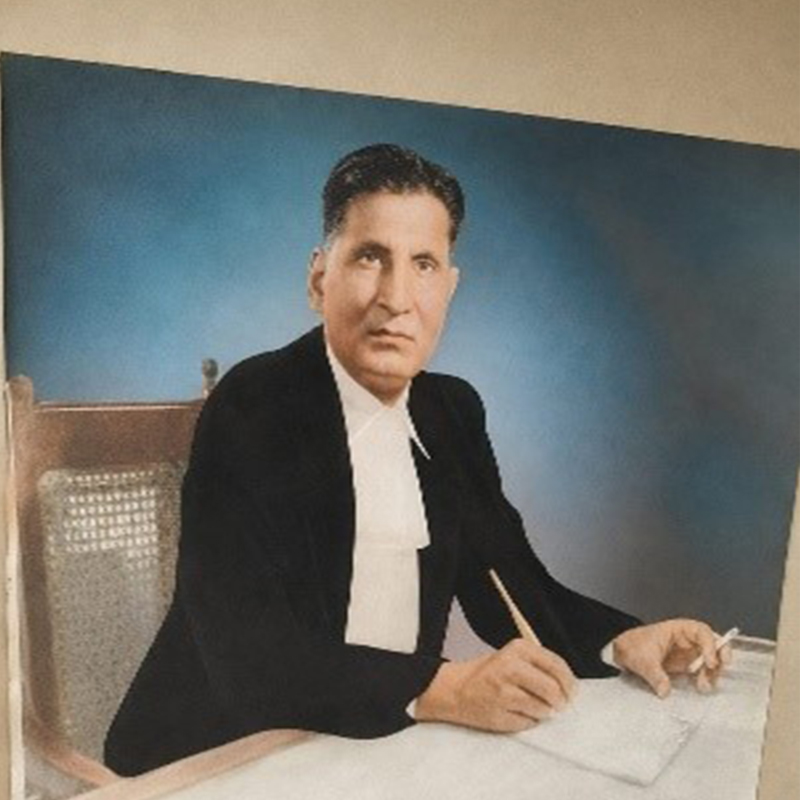
THE FIRST GENERATION
Khan Bahader Naseer Ahmad Siddiqi
The family’s legal tradition began with Naseer Ahmad Siddiqi, Advocate Supreme Court of Pakistan, who obtained his Bachelor of Law from the University of the Punjab in 1916 and commenced legal practice in the same year. His professional career was principally devoted to criminal law and criminal litigation, and he subsequently became the first Muslim Public Prosecutor of Lahore, an important distinction in the legal history of Lahore and an enduring part of the family’s professional heritage.

The Title
In 1945, in recognition of his personal distinction, he was bestowed the title of “Khan Bahader” by Lord F. M. Wavell. The title subsequently became associated with his name and remains an important part of the family’s professional history.
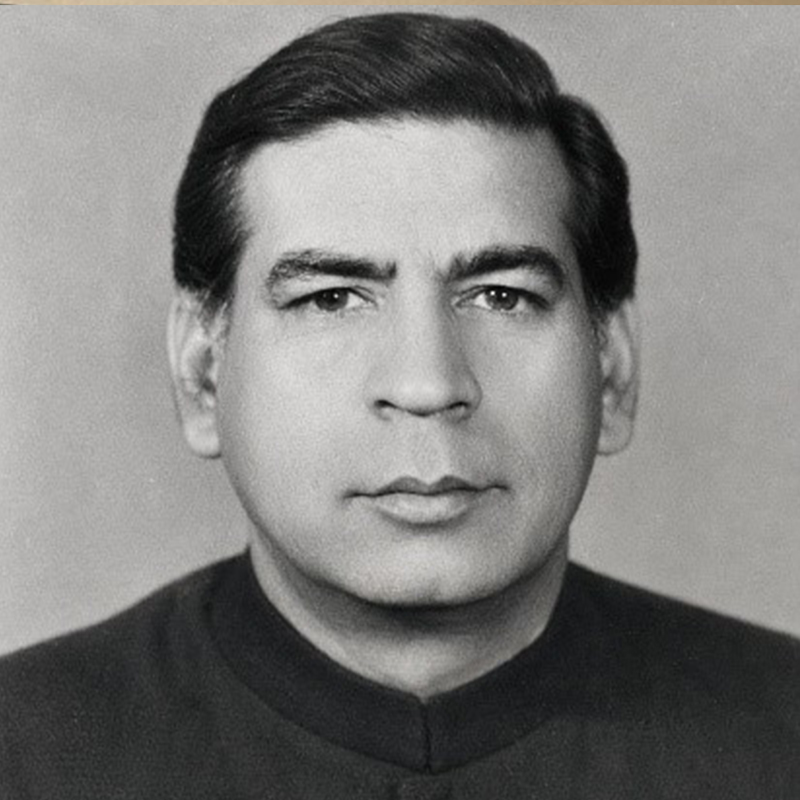
THE SECOND GENERATION
Late Advocate Qadeer Ahmad Siddiqi (Advocate Supreme Court of Pakistan)
The legal tradition continued through Late Advocate Qadeer Ahmad Siddiqi, Advocate Supreme Court of Pakistan, who entered the legal profession in 1965. A graduate of the University of the Punjab, he combined private legal practice with professional leadership and public service, continuing the tradition of courtroom advocacy and public responsibility established by the preceding generation. During his university years, he was elected Secretary of the Punjab University Students’ Union, reflecting his early involvement in public affairs, representation and institutional leadership. In 1981, he contested the election of the Lahore High Court Bar Association and finished as the first runner-up, reflecting his continuing engagement with the professional institutions of the legal fraternity. His career subsequently extended into government legal service, where he served Pakistan as Federal Counsel and later as Deputy Attorney General for Pakistan, representing the State and contributing his legal experience to matters of national and governmental importance. His professional legacy was founded upon legal practice, professional responsibility, public service, advocacy and institutional engagement. He passed away in 2002, leaving behind a legal tradition that would continue into the next generation.

THE THIRD GENERATION
Fahad Ahmad Siddiqi (Advocate Supreme Court of Pakistan)
The family’s legal tradition continues through Advocate Fahad Ahmad Siddiqi, Advocate Supreme Court of Pakistan, grandson of Khan Bahader Naseer Ahmad Siddiqi, Advocate Supreme Court of Pakistan, and son of Late Advocate Qadeer Ahmad Siddiqi, Advocate Supreme Court of Pakistan and Ex-Deputy Attorney General for Pakistan. The third generation represents the evolution of the family’s legal practice into a contemporary specialist focus on children, parents, child custody, guardianship, visitation, shared parenting and family justice. While the substantive focus has evolved with the changing needs of society and the legal system, the professional foundation remains rooted in the same commitment to law, advocacy, professional responsibility and public service that characterized the preceding generations. The present practice carries that tradition forward through litigation, legal research, publications, professional education and advocacy for the development of family justice in Pakistan.
FROM GENERAL ADVOCACY TO SPECIALIST FAMILY JUSTICE
The evolution of the practice reflects the evolution of the legal system itself. The first generation developed its professional identity largely through criminal advocacy, prosecution and State representation; the second generation combined private practice, professional leadership and government legal service; and the present generation has developed particular expertise in children, parenting, custody, guardianship and family justice, while maintaining the ability to address constitutional, criminal, civil and other contentious matters where the circumstances of a case require it. This evolution does not represent a departure from the family’s legal tradition; it represents its continuation in a new legal environment.
OUR SPECIALIST PRACTICE
Children, Parents & Family Justice
CCLSIP has developed a particular area of legal expertise around the law governing children and their relationships with their parents. Our work is informed by the Guardians and Wards Act, 1890, the Family Courts Act, constitutional jurisdiction, Pakistani judicial precedent and principles of Islamic law relating to custody and guardianship. We advise and represent clients in matters concerning child custody, Hizanat, guardianship and joint guardianship, visitation and parental access, home visitation, overnight and extended access, shared parenting and parenting schedules, recovery of minors, relocation, international child custody, wrongful removal and retention, Hague Convention-related matters, maintenance, enforcement of custody and visitation orders, family litigation, appeals and revisions, constitutional petitions, habeas corpus and litigation before the High Courts and Supreme Court of Pakistan. Our practice therefore extends from the first legal consultation and assessment of a matter through pleadings, trial and interim relief, to enforcement, appeal and, where appropriate, constitutional or Supreme Court proceedings.
THE CHILD AT THE CENTRE
A Custody Case Is Not Merely a Dispute Between Parents
We recognize that disputes involving children are fundamentally different from ordinary litigation. They involve not only legal rights, but also relationships, education, residence, family structures, emotional wellbeing and, ultimately, the future of a child. A custody dispute is therefore not simply a question of which parent should have custody; it requires consideration of where the child should live, how the child will maintain a meaningful relationship with each parent, who will make important decisions concerning education and healthcare, what arrangements should apply during weekends and school holidays, whether the child should be permitted to travel, what may happen if one parent relocates, and how the parenting arrangement can remain workable after a court order has been made. These practical questions often determine whether a custody arrangement succeeds in real life. Our approach therefore considers not merely the immediate relief sought before the court, but also the long-term parenting structure, the welfare of the child and the practical realities that may follow from any order or arrangement.
LAW, JURISPRUDENCE & RESEARCH
We Do Not Approach Family Law as a Closed Subject
Our work in family law extends beyond individual litigation and is informed by continuing engagement with legislation, jurisprudence, legal scholarship and comparative developments. We examine the interaction between Pakistani legislation, Islamic jurisprudence, constitutional principles, judicial precedent, comparative family law and the developing concept of shared parenting. This research dimension is particularly important in areas where Pakistani family law continues to evolve, including shared parenting, meaningful visitation, the child’s voice, relocation, international custody and family-justice reform. The purpose of this work is not simply academic; many of the questions explored through research arise directly from the realities of litigation: whether the existing legal approach adequately protects the child, what the law permits, what principles have been established through jurisprudence, and where the law or its application may require further development. This continuing connection between litigation, jurisprudence and scholarship forms an important part of our professional identity and enables us to approach emerging family-law questions with both practical litigation experience and a broader understanding of their legal and social implications.
PUBLICATIONS & SCHOLARSHIP
Our specialist work in family law and child justice is supported by a continuing body of legal scholarship, publications and research concerning Pakistani family law, child custody and shared parenting. This work reflects an effort to examine contemporary family-law questions not only through the perspective of litigation, but also through legal scholarship, Islamic jurisprudence, constitutional principles, judicial precedent and comparative developments in family law. Our published works include Non-Custodial Father and Guardian & Family Laws (2018), which examines the legal position of the non-custodial father within Pakistan’s family and guardianship framework, including the relationship between custody, guardianship and continuing parental responsibility; Shared Parenting & Pleadings in Pakistan (2022), which considers shared parenting in the Pakistani context, including meaningful parental involvement, visitation and the manner in which parenting arrangements may be advanced through legal proceedings; and Shared Parenting — The Pakistani Perspective (2024), which examines shared parenting through Pakistani law, Islamic jurisprudence and developing family-law discourse, including the relationship between Hizanat, guardianship, the welfare of the minor and contemporary approaches to shared parental responsibility. The practice has also contributed to the Routledge International Handbook of Shared Parenting (2021), placing the Pakistani perspective within a wider international discussion of shared parenting and contemporary family law. Our broader professional work includes articles, research papers, lectures and conference contributions examining the intersection of Pakistani law, Islamic jurisprudence, constitutional principles, judicial precedent, comparative family law and shared parenting.
REFORM & ADVOCACY
Beyond Individual Cases
Our professional work extends beyond representing individual clients and includes a continuing commitment to the development of a more coherent, child-focused and practically effective family-justice system in Pakistan. Our work and advocacy encompass shared parenting reform, visitation reform, home and overnight access, Family and Guardian Court reform, public-interest litigation, constitutional litigation, child-justice initiatives, legal policy and reform proposals, professional training and the development of custody jurisprudence. The purpose is not merely to consider what the law presently provides, but also to examine how the legal system can respond more effectively to the realities of modern families and the evolving needs of children and parents. We believe that meaningful legal reform develops through a continuing relationship between research, advocacy, litigation, jurisprudence and policy: research can inform advocacy, advocacy can shape litigation, litigation can develop jurisprudence, and jurisprudence can ultimately influence policy and reform.
SUPERIOR COURT & CONSTITUTIONAL LITIGATION
Although CCLSiP has a specialist family-law identity, complex family disputes frequently require remedies beyond the Family or Guardian Court. Our practice therefore handles appropriate matters before Family Courts, Guardian Courts, High Courts and the Supreme Court of Pakistan, including custody, visitation, maintenance, guardianship and recovery of minors, as well as appeals, revisions, constitutional petitions, petitions for leave to appeal and significant questions of law. Our constitutional practice also extends to matters involving jurisdictional defects, fundamental rights, unlawful or arbitrary orders, serious procedural irregularities and other cases in which constitutional intervention is legally available. This broader litigation capability is important because a family dispute does not always remain confined to a single court, jurisdiction or remedy, and effective representation may require a coordinated strategy across different judicial forums.
CRIMINAL & GENERAL LITIGATION
The family’s legal heritage is rooted in criminal advocacy, prosecution and State representation, and that tradition remains an important part of the broader professional identity of the practice. CCLSiP therefore retains capability in criminal litigation, bail matters, appeals, revisions and related proceedings, together with civil and other contentious matters where the expertise of its lawyers is required. This broader litigation capability enables the practice to approach complex matters from a comprehensive legal perspective, particularly where family, criminal, civil and constitutional proceedings intersect. The present specialist focus on family and child justice is thus supported by a much longer tradition of courtroom advocacy across different jurisdictions and areas of law.
OUR APPROACH TO LEGAL REPRESENTATION
We Do Not Begin With a Standard Pleading
A strong case begins before the petition is drafted. We first seek to understand the facts, the child or family circumstances, the existing legal arrangement, the available evidence, any previous proceedings and court orders, immediate risks, the client’s actual objective and the legally available remedies. Only after assessing the complete legal and factual position do we determine the appropriate course, which may involve negotiation, mediation, Family or Guardian Court proceedings, protective relief, appeal or revision, constitutional litigation, habeas corpus, international proceedings, or a combination of several remedies. Our objective is not to initiate proceedings merely because a legal remedy exists, but to identify the right legal remedy, the right forum and the right strategy for the particular circumstances of each case.
OUR PROFESSIONAL VALUES
Across three generations, the legal profession has changed, as have the courts, the law and society, but certain principles have remained constant. Professional integrity remains central to our approach, and we regard legal representation as a professional responsibility built upon trust. We remain committed to advocacy, believing that difficult legal questions require preparation, persistence and principled representation. We respect the law and recognize that the strength of any legal argument ultimately depends upon the law, evidence and jurisprudence supporting it. Our tradition also reflects a commitment to public service, shaped by significant periods of public legal service and State representation across generations. At the same time, we believe that modern legal practice requires continuous learning and continuing engagement with legislation, jurisprudence, comparative developments and legal scholarship. These values form the bridge between the first generation of the practice and the legal practice of today.
OUR LEGACY IS NOT ONLY ABOUT THE PAST
A legal legacy is not measured merely by the names of those who came before, but by what the next generation does with what it inherits. The purpose of preserving our history is therefore not simply to look backwards, but to acknowledge the professional foundation upon which the present practice has been built and to continue developing it for the legal challenges of the present generation. Today, that work is particularly focused on children, parents and family justice in Pakistan, and CCLSiP carries this tradition forward through litigation, legal research, publications, professional education, advocacy and family-law reform.
THREE GENERATIONS. ONE CONTINUING COMMITMENT.
The legal tradition began in 1916 when Khan Bahader Naseer Ahmad Siddiqi commenced legal practice. In 1945, he was bestowed the title of Khan Bahader by Lord F. M. Wavell, and following Independence he served as Assistant Advocate General, West Pakistan and represented the State in significant proceedings. In 1965, Qadeer Ahmad Siddiqi entered the legal profession, later contesting the Lahore High Court Bar Association election in 1981 and finishing as first runner-up. His professional career also included service as Federal Counsel and subsequently as Deputy Attorney General for Pakistan. He passed away in 2002, leaving behind a legal tradition that continues through the third generation, represented by Advocate Fahad Ahmad Siddiqi, Advocate Supreme Court of Pakistan, whose present specialist practice focuses particularly on child custody, guardianship, shared parenting and family justice.
THE PRESENT TEAM
The present team represents the continuation of that tradition in contemporary legal practice. Under the principal leadership of Advocate Fahad Ahmad Siddiqi in Lahore, CCLSiP brings together lawyers and associates with the capacity to assist in family, constitutional, criminal, civil and appellate litigation. The practice is further supported by associates working in other jurisdictions, including Karachi and Islamabad, enabling matters requiring representation, assistance or coordination outside Lahore to be handled through a connected professional network. Together, the team combines the experience of established legal practice with the energy and development of the next generation of lawyers.
THE PRESENT PRACTICE
Tradition Meets Contemporary Family Justice
The law is not static, and the questions confronting courts today are different from those faced by earlier generations. Modern family disputes may involve shared parenting, extended and overnight access, the child’s voice, international relocation, wrongful removal and retention, cross-border parenting, constitutional rights, digital communication, parallel proceedings in different jurisdictions, and increasingly complex questions concerning the welfare of children. Our practice has evolved accordingly. While the foundation remains the same, the legal questions have changed, and our task is to meet those questions with the same commitment to advocacy while bringing the benefit of contemporary legal research, jurisprudence and strategic litigation.
WHY CLIENTS ENGAGE US
Clients engage us for our particular expertise in child custody, guardianship, visitation, shared parenting and family justice; our strategic approach to assessing the legal problem before determining the appropriate remedy; and our experience in complex litigation before Family Courts, Guardian Courts, High Courts and the Supreme Court. Our work is informed by legislation, Pakistani precedent, Islamic jurisprudence, constitutional principles and comparative family law, with experience extending to cross-border custody, relocation, wrongful removal and international parenting issues. Our practice also extends beyond individual cases into legal research, publications, professional education and family-law reform. Above all, we take a long-term perspective, considering not only how an order may be obtained, but how that order will operate in the life of the child and the family afterwards.
OUR COMMITMENT
We Do Not Promise Outcomes. We Promise Serious Legal Work.
No responsible lawyer can promise a particular result in litigation. What we can provide is a serious assessment of the legal position, careful preparation of the case, strategic advice, clear identification of risks and available remedies, and committed representation. We will tell a client where the case is strong, identify where it is weak, explain the available options, and help the client understand the consequences before important legal decisions are made.
CHILD CUSTODY LAW SERVICES IN PAKISTAN
Specialist Legal Representation for Children, Parents & Family Justice
Our present practice stands at the intersection of family law, child justice, constitutional litigation, legal research and reform. The history behind the practice gives it its foundation, the present specialization gives it its identity, and the continuing commitment to advocacy gives it its direction..
OUR MISSION
Our mission is to provide principled, strategic and client-focused legal representation grounded in professional integrity, rigorous preparation and respect for the law. We seek to understand the real legal problem, identify the appropriate remedy and pursue each matter with clarity, commitment and purpose, while keeping the interests and welfare of those we represent at the centre of our work. At the same time, we are committed to continuous learning, professional development, legal scholarship and the advancement of a more effective and just legal system.
OUR VISION
Our vision is to build a modern, principled and respected legal practice that combines the strength of a longstanding legal tradition with the demands of contemporary law. We aspire to bring together exceptional lawyers, rigorous legal thinking and a culture of integrity, collaboration and continuous learning, so that our clients receive thoughtful, strategic and high-quality legal representation. We seek not merely to practice law, but to contribute to the development of jurisprudence, professional standards and a more effective and just legal system.